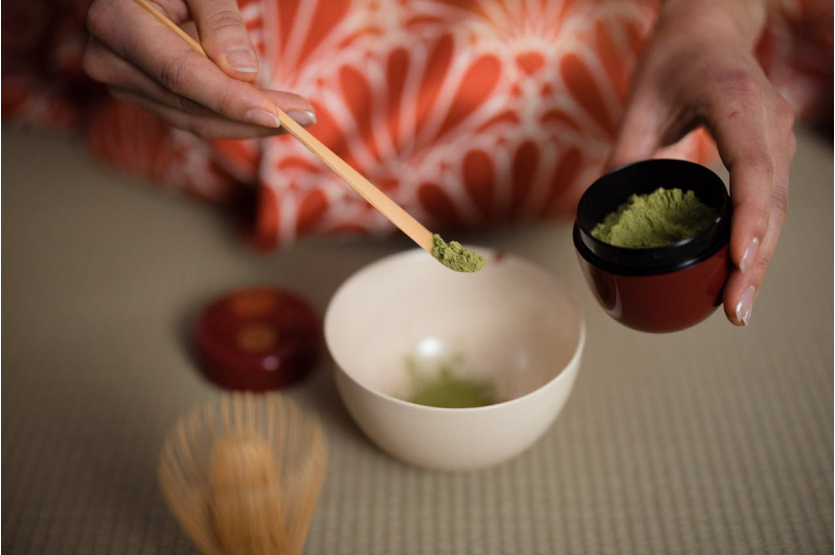
Matcha, the vibrant green powdered tea, has a history as rich and profound as its flavor. Originating in ancient China and later flourishing in Japan, matcha has been deeply intertwined with cultural and spiritual practices for centuries. From its early use by Zen Buddhist monks to its modern-day popularity as a superfood. In this blog post, we’ll explore the origins of matcha in ancient China and trace its journey to Japan, where it evolved and became the centerpiece of a refined tea culture.
Tang Dynasty: Grounded Tea Powder & Boiled Tea
In its early days, tea was primarily consumed as a medicinal drink. Tribes in Northwestern China would boil tea leaves until all the flavor and nutrients were extracted. The result was a bitter brew, far from a drink of enjoyment. Instead, tea was valued for its practicality, helping to ward off illnesses and keep people warm.
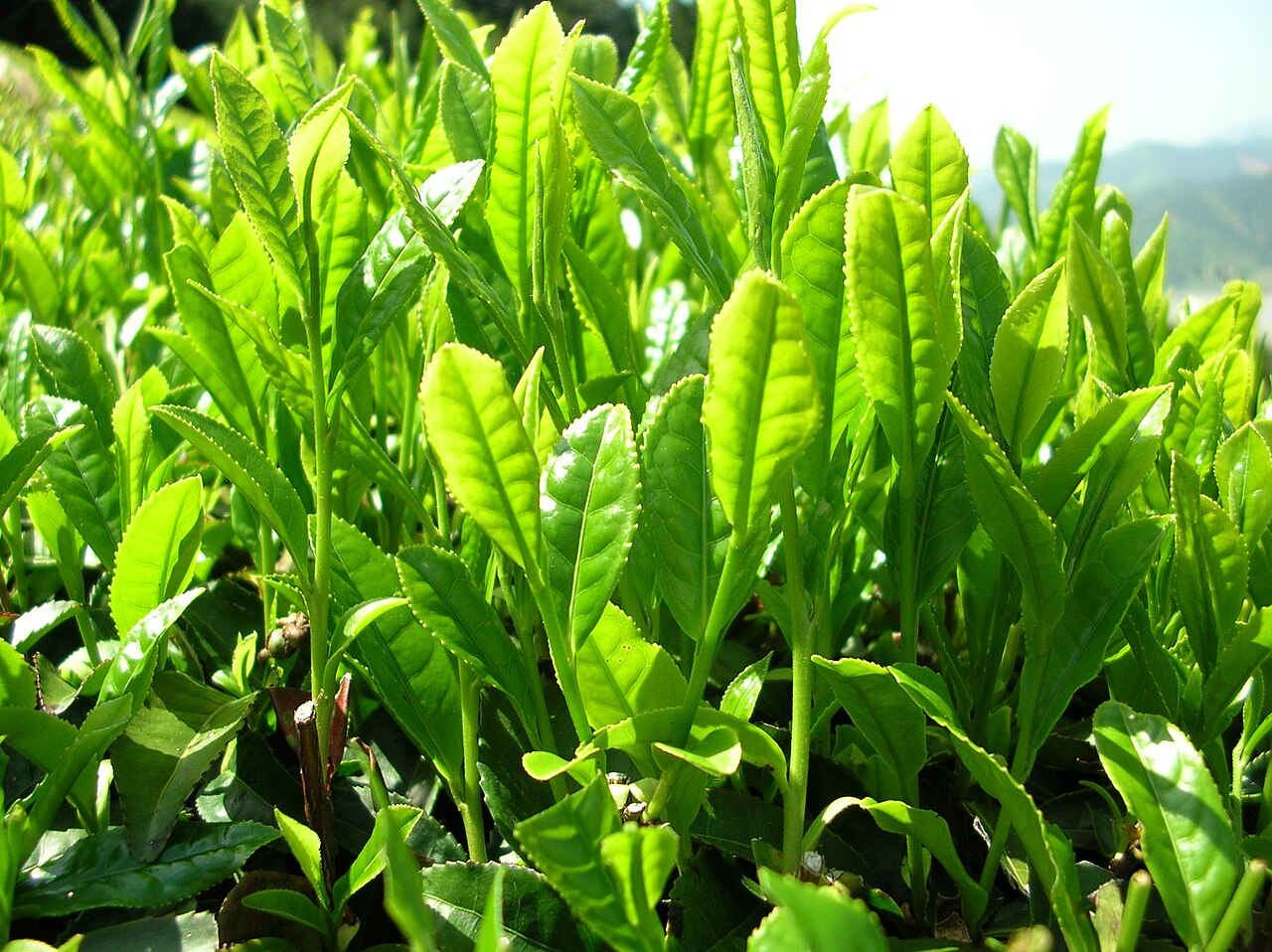
Things changed in 618 AD when Emperor Gaozu rose to power, marking the beginning of the peaceful and prosperous Tang Dynasty (618-907 CE). The earliest precursor to matcha emerged during this period. Tea was cultivated, steamed, and compressed into bricks to facilitate transport and trade, which flourished along the legendary Silk Road.
These bricks made it easier to store and transport tea over long distances, matching the growing demands of trade. Preparation involved roasting a piece of the brick, grinding it into a coarse powder with a mortar and pestle, and then boiling it in water, often with salt and ginger.
This method was meticulously documented by the revered tea scholar Lu Yu in his seminal eighth-century work, The Classic of Tea (茶经). Lu Yu’s work was encyclopaedic, covering the ideal soil, cultivation methods, utensils, and brewing techniques, elevating tea drinking from a mere folk custom to a cultured art form.
Song Dynasty: Tea Competitions, Buddhist Adoption & Whisked Tea
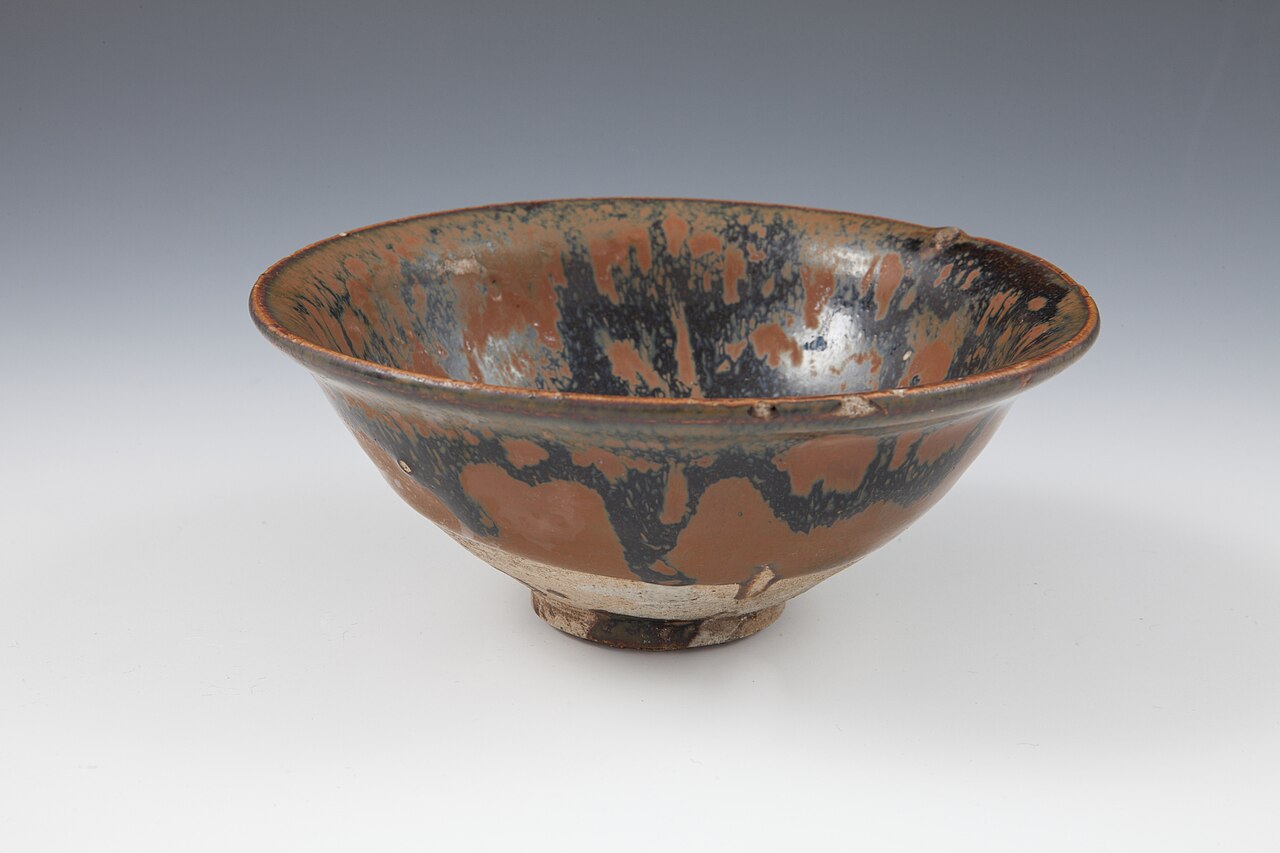
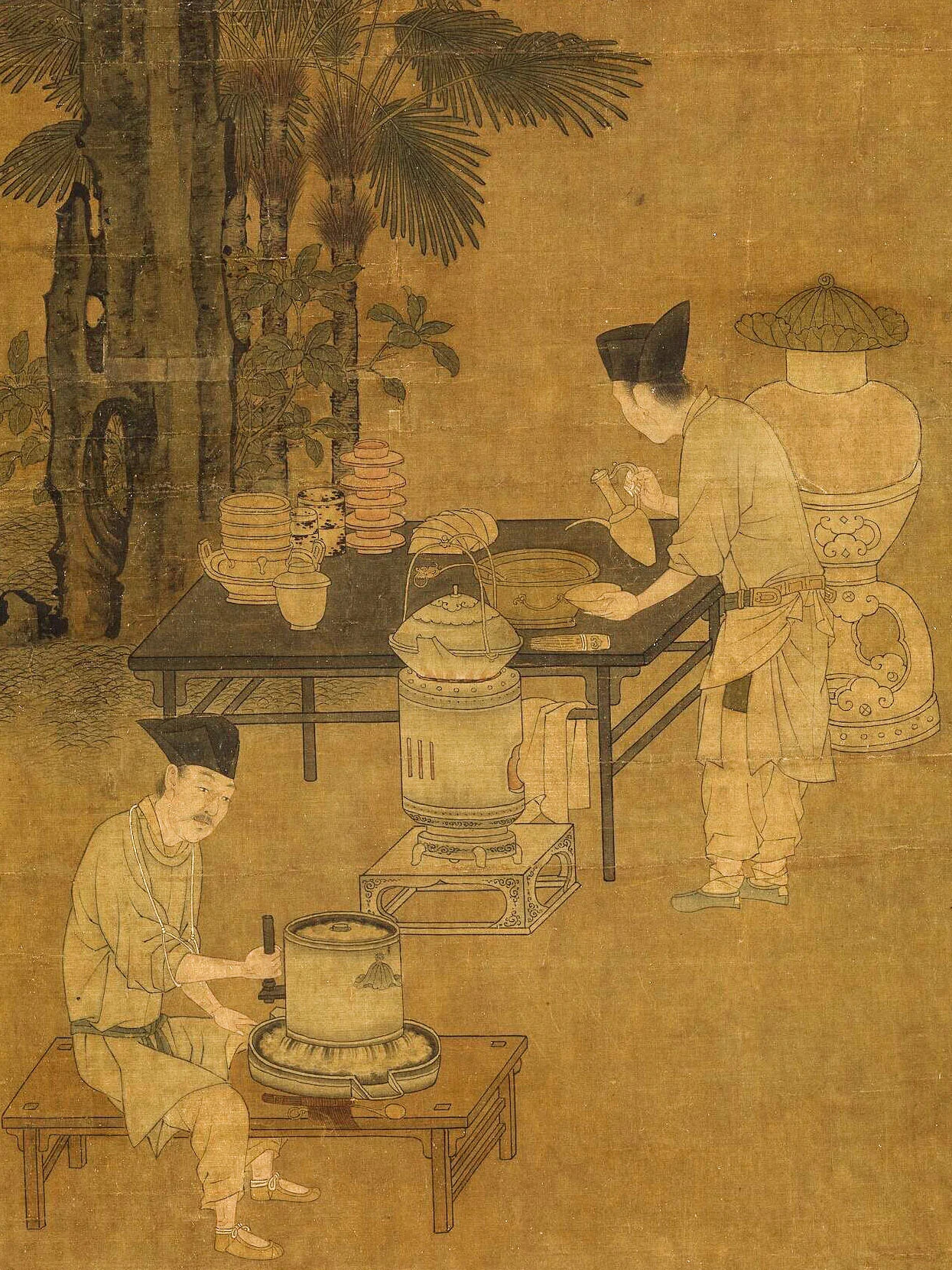
The practice evolved significantly during the subsequent Song Dynasty (960-1279 CE). The favoured style shifted from boiling to whisking. High-quality tea leaves were picked, steamed, and dried before being ground into a finer powder. This powder was then placed in a bowl, hot water was added, and the mixture was whipped into a froth with a bamboo whisk. This method, known as “dian cha” (点茶) in Mandarin, was immensely popular among the elite and imperial court. It became the subject of elegant competitions called “dou cha” (斗茶), where participants would try to discern the provenance of different teas based on the quality of their froth.
Most crucially for matcha’s future, this powdered tea was adopted by Chan (the Chinese predecessor to Zen) Buddhist monasteries. The monks valued the heightened alertness and prolonged concentration the powdered tea provided during long, arduous meditation sessions. This was a direct result of consuming the whole leaf ground into micronised particles, delivering a potent combination of caffeine for alertness and L-theanine, an amino acid that promotes a state of calm, focused concentration without the jittery side effects often associated with coffee.
At Teasenz, we can supply wholesale matcha for your startup or business.